ACL Injury Treatment & Reconstruction in Bengaluru
A torn ACL can cause knee pain, swelling and a feeling that the knee may suddenly give way. Get your knee evaluated to understand the extent of the injury and whether rehabilitation or ACL reconstruction may be appropriate for you.
Book a Consultation
Tell us how we can help. Our team will contact you regarding your appointment.
Our orthopaedic coordination team will contact you regarding your appointment slot.
Could Your Knee Problem Be an ACL Injury?
ACL injuries commonly occur during sudden twisting, awkward landings, rapid changes in direction or sports-related trauma.
A Popping Sensation
Many patients report an audible pop or sudden tearing sensation deep inside the knee joint at the precise moment of injury.
Rapid Knee Swelling
Significant swelling often develops within 2 to 6 hours after trauma, caused by hemarthrosis (bleeding within the knee joint capsule).
Pain After Twisting or Landing
Acute discomfort during rotational movement, deceleration, or stepping down, which makes continuing activity difficult or impossible.
Feeling of Knee Instability
A persistent sense of looseness or apprehension that the knee cannot support body weight, especially during directional shifts.
Repeated "Giving Way" Episodes
The knee abruptly buckles outward or gives way during walking, stair climbing, or simple daily pivots, even after initial pain subsides.
Difficulty Returning to Sport
Inability to sprint, cut, pivot, jump, or play sports like badminton, football, or cricket without pain, apprehension, or joint shift.
Important Clinical Insight: If your knee repeatedly feels unstable after an injury, a specialist assessment can help determine whether the ACL or other structures within the knee have been damaged.
Get Your Knee Assessed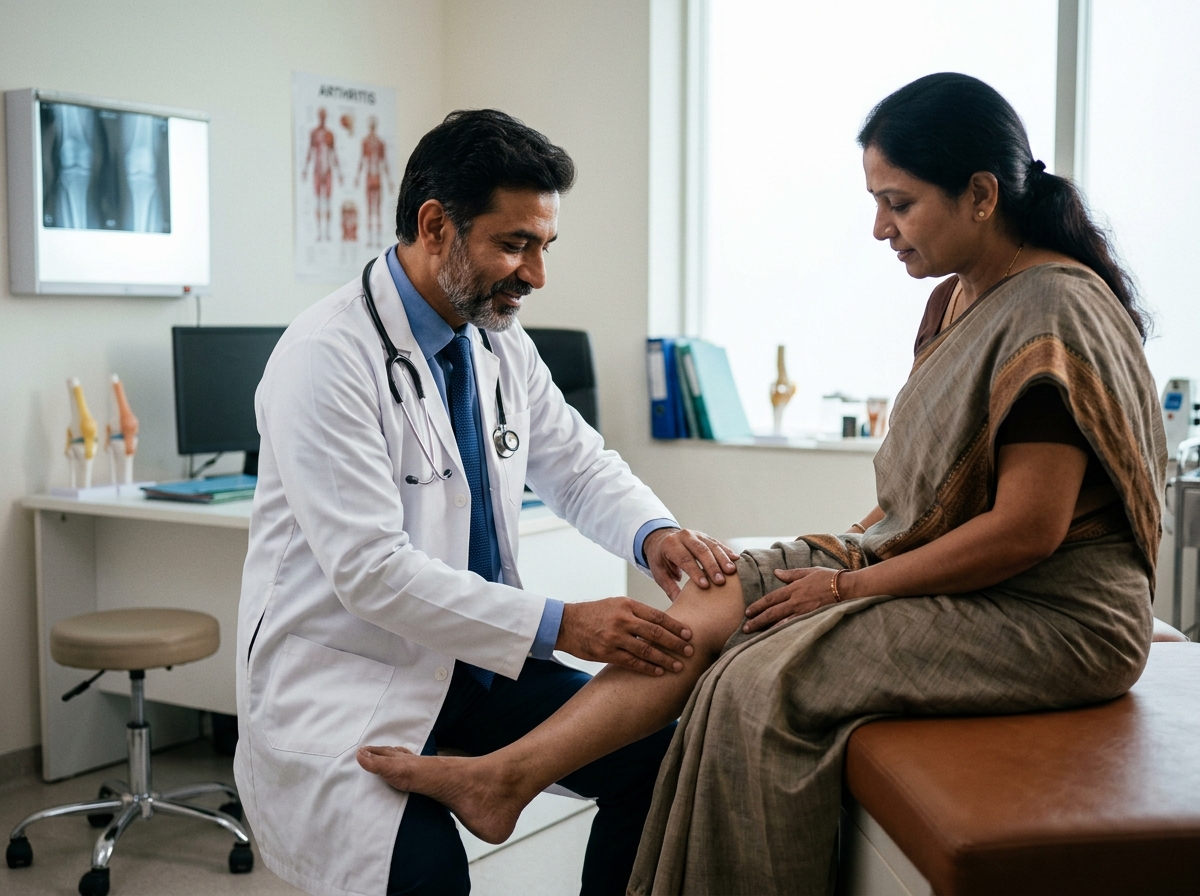
How Is an ACL Injury Diagnosed?
Diagnosis begins with understanding how the injury occurred, the symptoms you are experiencing and whether the knee feels unstable during everyday or sporting activity.
During your clinical consultation, our orthopaedic specialist assesses:
Key Clinical Examination Tests
Specialized physical maneuvers allow the specialist to assess anterior translation and rotational stability of the tibia relative to the femur:
With the knee bent at approximately 20 to 30 degrees, the doctor gently stabilizes the thigh and checks for excessive forward movement or soft endpoint of the shinbone.
Performed with the knee flexed at 90 degrees to compare anterior laxity between your injured and healthy knee.
Evaluates complex rotational instability and dynamic giving way, replicating the mechanical slipping sensation patients feel during pivoting.
MRI & Imaging
An MRI may be recommended to evaluate the ACL and identify associated injuries involving the meniscus, cartilage or other knee ligaments.
Bring your scan, CD, and diagnostic reports to your consultation so they can be reviewed as part of your comprehensive orthopaedic evaluation.
Book an MRI Review & ConsultationNot Every ACL Tear Is the Same
ACL injuries occur along a spectrum of structural severity and are frequently accompanied by trauma to surrounding cartilage and joint stabilizers.
Partial ACL Tear
Some fibres of the ACL remain intact. Symptoms and knee stability can vary depending on the extent of the injury and the functional integrity of the remaining ligament tissue.
- May preserve functional joint control
- Often responsive to structured physiotherapy
- Monitored through physical exams & scan review
Complete ACL Tear
The ligament is completely disrupted. Patients may experience significant instability, particularly during twisting, pivoting, stair navigation, or sporting activity.
- Significant anterior and rotational laxity
- Higher risk of recurrent giving-way episodes
- Reconstructive surgery commonly evaluated
Associated Knee Injuries
ACL injuries can occur together with:
- Meniscus tears (medial or lateral shock absorbers)
- Articular cartilage injuries (joint surface wear)
- MCL or collateral ligament injuries
- Subchondral bone bruising
The treatment plan should therefore be based on the entire knee injury rather than the ACL alone.
Discuss Your Knee Injury With a SpecialistDoes Every ACL Tear Need Surgery?
ACL treatment depends on several factors including knee stability, the severity of the tear, associated injuries, activity level and the patient's goals.
Non-Surgical Management
May be appropriate for selected patients whose knees remain functionally stable or whose activity requirements do not involve high-demand pivoting movements.
Treatment may include:
-
Targeted Physiotherapy: Restoring full joint motion and reducing effusion.
-
Swelling and Pain Management: Cryotherapy, medical guidance, and relative offloading.
-
Progressive Strengthening: Targeted conditioning for the quadriceps, hamstrings, and calves.
-
Neuromuscular Training: Dynamic proprioceptive and balance exercises to stabilize the joint.
-
Activity Modification: Adjusting daily ergonomics and recreational sports.
-
Gradual Return to Activity: Structured functional milestones under guided supervision.
ACL Reconstruction
ACL reconstruction may be considered for patients with significant knee instability, repeated giving-way episodes, associated injuries or those wishing to return to high-demand or pivoting sports.
Clinical Indications May Include:
-
Mechanical Instability: Knee giving way during routine daily walking, stairs, or work.
-
High-Demand Sports: Return to cutting, pivoting sports (football, badminton, basketball, martial arts).
-
Associated Meniscus / Ligament Tears: Repairable meniscus tear needing a stable joint to heal.
-
Protecting Joint Longevity: Minimizing secondary wear on articular cartilage from recurrent subluxation.
-
Physically Demanding Occupations: Heavy manual work or uneven terrain navigation.
Not Sure Which Option Is Right for You?
A thorough orthopaedic evaluation will clarify your knee stability grade and help you make an informed, confident treatment choice.
Book an ACL ConsultationHear From Our Recovered Patients
Real stories of joint stability, mobility restoration, and return to active life at Sathya Sai Hospital.
 Verified Recovery
"The surgical care and post-op rehabilitation restored full stability in my knee. I felt supported every step of the way."
Verified Recovery
"Accurate diagnosis, clear guidance, and expert physiotherapy enabled me to get back to active walking and confidence."
 Verified Recovery
"World-class hospital infrastructure and expert orthopaedic team. Highly recommend Sathya Sai Hospital for knee care."
ACL & Sports Injury Care at Sathya Sai Hospital
Located in KR Puram, Bengaluru, Sathya Sai Orthopaedic & Multispeciality Hospital brings together experienced orthopaedic surgeons, modern surgical infrastructure, digital imaging, and dedicated physiotherapy care under one roof.
Consult an Orthopaedic & Sports Injury Specialist
Meet our experienced orthopaedic and sports medicine team at Sathya Sai Hospital.

Dr. Vimal Kumar K H
Orthopaedic specialist with dedicated sub-specialty training in knee arthroscopy, sports injuries, ligament reconstruction and shoulder care.
Book Appointment
Dr. Mahesh M N
CEO and Medical Director with over 20 years of clinical experience in complex trauma, spine and joint reconstruction surgeries.
Consult with Team
Dr. Vijay M
Senior Trauma and Arthroplasty Surgeon with over 20 years of orthopaedic excellence in complex joint procedures.
Consult with TeamFrequently Asked Questions About ACL Injuries
Get clear, medically responsible answers to common questions about ACL tears, diagnosis, reconstruction, and rehabilitation.
Can I walk with an ACL tear?
Yes, many patients can walk in straight lines once acute swelling and pain decrease. However, the knee often feels unstable or gives way during pivoting, turning, stepping off curbs, or navigating stairs because the ACL is the primary stabilizer against anterior and rotational shin displacement.
Does every ACL tear require surgery?
No. Surgery is not automatically required for every patient. Treatment decisions depend on your functional knee stability, age, physical activity level, presence of associated meniscus or cartilage tears, and your desire to return to sports involving cutting and pivoting movements.
Can a partial ACL tear heal without surgery?
In selected patients with partial tears where remaining ligament fibers maintain functional stability, non-surgical management with structured physiotherapy, quadriceps and hamstring strengthening, and neuromuscular conditioning may allow satisfactory recovery without surgical intervention.
How do I know if my ACL is completely torn?
A definitive diagnosis combines a thorough physical examination by an orthopaedic specialist (using clinical tests like the Lachman and Pivot-Shift tests) and a high-resolution MRI scan to confirm the structural continuity of ligament fibers and assess concurrent joint injuries.
What happens if an ACL tear is left untreated?
If a functionally unstable knee is left unaddressed and continues to suffer repeated buckling episodes, the abnormal joint motion can cause secondary tears to the shock-absorbing menisci and wear away joint cartilage, potentially accelerating post-traumatic osteoarthritis.
When is ACL reconstruction recommended?
Reconstruction is generally considered when a patient experiences persistent knee instability during everyday tasks, has associated repairable meniscus or multi-ligament damage, or intends to return to competitive, pivoting sports such as football, basketball, badminton, or cricket.
Which graft is used for ACL reconstruction?
Common autografts include hamstring tendons, patellar tendon (bone-patellar tendon-bone), and quadriceps tendon. There is no universal "best" graft; the choice is selected based on individual patient anatomy, age, activity level, previous surgeries, and surgeon assessment.
Can an ACL tear also damage the meniscus?
Yes. More than 50% of acute ACL injuries occur alongside meniscus tears. Preserving or repairing the meniscus during arthroscopy is a primary clinical priority to protect long-term cartilage cushioning and knee joint health.
How long does ACL rehabilitation take?
Recovery is an individualized progression. Basic walking and daily independence are typically achieved within weeks, while progressive muscle strengthening, running progression, and full athletic conditioning extend over several months guided by functional milestones rather than time alone.
When can I return to running?
Straight-line jogging is introduced only after sufficient quadriceps strength, absence of swelling, full knee extension, and adequate movement mechanics are demonstrated on physical testing, typically guided between 3 to 5 months post-procedure after specialist clearance.
Can I return to sports after ACL reconstruction?
Many active individuals and athletes return to recreational or competitive sport following structured rehabilitation. Clearance should be determined by objective criteria—including limb symmetry strength tests, single-leg hop tests, and neuromuscular control—to reduce the risk of re-injury.
Is an MRI always required for an ACL injury?
While a skilled orthopaedic specialist can often detect ligament laxity during physical examination, an MRI is essential to confirm whether the tear is partial or complete, determine graft sizing, and identify concurrent meniscal, cartilage, or bone bruising complications before treatment planning.
Have a specific question about your knee condition?
Ask Our Orthopaedic TeamIs Knee Instability Stopping You From Returning to Normal Activity?
If you have knee pain, instability or repeated giving-way episodes after an injury, an orthopaedic assessment can help identify the problem and determine the appropriate treatment.
Request an Evaluation
Our team will call you to confirm appointment details.
Our orthopaedic coordination desk will contact you shortly.