Rotator Cuff Tear Treatment in Bengaluru
Persistent shoulder pain, weakness or difficulty lifting the arm may sometimes be related to a rotator cuff tendon injury. Specialist assessment can help determine whether the problem is a rotator cuff tear, another shoulder condition, or an issue that may improve with non-surgical treatment.
Book a Consultation
Tell us what you are experiencing. Our team will contact you regarding your appointment.
Our orthopaedic coordination team will contact you regarding your appointment slot.
What Is the Rotator Cuff?
The rotator cuff is a specialized group of four muscles and their tendons that envelope the ball-and-socket joint of the shoulder.
How the Rotator Cuff Works
Working together as a dynamic stabilizer, these tendons keep the head of the upper arm bone (humeral head) firmly centred inside the shallow shoulder socket while allowing a wide range of arm movement.
- Stabilises the shoulder joint: Prevents upward slipping during arm movements.
- Lifts the arm: Initiates smooth elevation and overhead reaching.
- Rotates the arm: Enables inward and outward twisting motions.
- Coordinates shoulder movement: Works with the deltoid and scapular muscles.
Tendon Vulnerability
Because the rotator cuff tendons pass beneath the bony roof of the shoulder (the acromion), repetitive use, natural tissue aging, or sudden falls can cause these tendons to become irritated, inflamed, pinched, or torn.
Could Your Shoulder Pain Be a Rotator Cuff Problem?
Rotator cuff conditions can present in different ways, ranging from dull aches during overhead reaching to sharp pain that wakes you up at night.
Shoulder Pain
Pain frequently occurs over the front and side of the shoulder and can sometimes radiate down the outside of the upper arm towards the elbow.
Pain When Lifting the Arm
Raising the arm between shoulder height and overhead can produce a painful arc of movement, making basic reaching uncomfortable.
Night Pain
Many patients report increased discomfort at night, especially when attempting to sleep on the affected side, often disrupting normal rest.
Shoulder Weakness
The arm may feel weak or trembling when attempting to lift groceries, pour from a kettle, or hold the arm outward against resistance.
Difficulty Reaching
Everyday movements such as reaching behind the back, putting on a jacket, combing hair, or reaching into a cupboard become increasingly difficult.
Loss of Shoulder Function
Persistent pain and muscle inhibition gradually compromise work capability, fitness routines, driving comfort, and daily independence.
Clinical Insight: Shoulder pain has many possible causes, including bursitis, tendinopathy, frozen shoulder, or neck issues. Persistent pain or weakness should be assessed rather than assumed to be a rotator cuff tear.
Get Your Shoulder AssessedWhen Should You Get Your Shoulder Assessed?
Early evaluation helps clarify whether conservative rehabilitation is suitable or if structural tendon damage requires specialized monitoring.
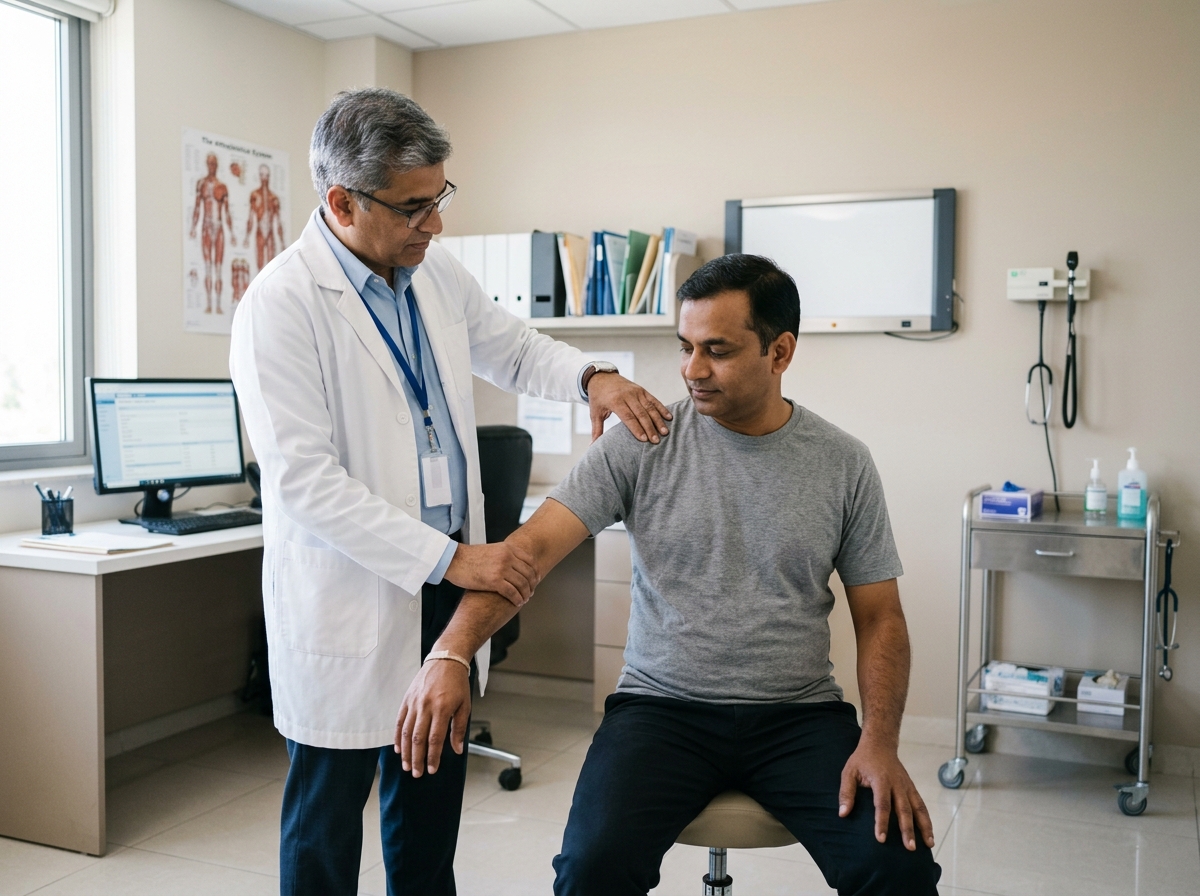
How Is a Rotator Cuff Tear Diagnosed?
Accurate diagnosis involves listening to your symptom history, performing detailed clinical shoulder testing, and reviewing diagnostic imaging where clinically indicated.
1. Clinical Examination
During clinical evaluation, the orthopaedic specialist assesses:
2. X-Ray & MRI Imaging
X-rays do not directly show the rotator cuff tendons but can evaluate bony anatomy, acromial spurs, calcific deposits, and help rule out shoulder arthritis.
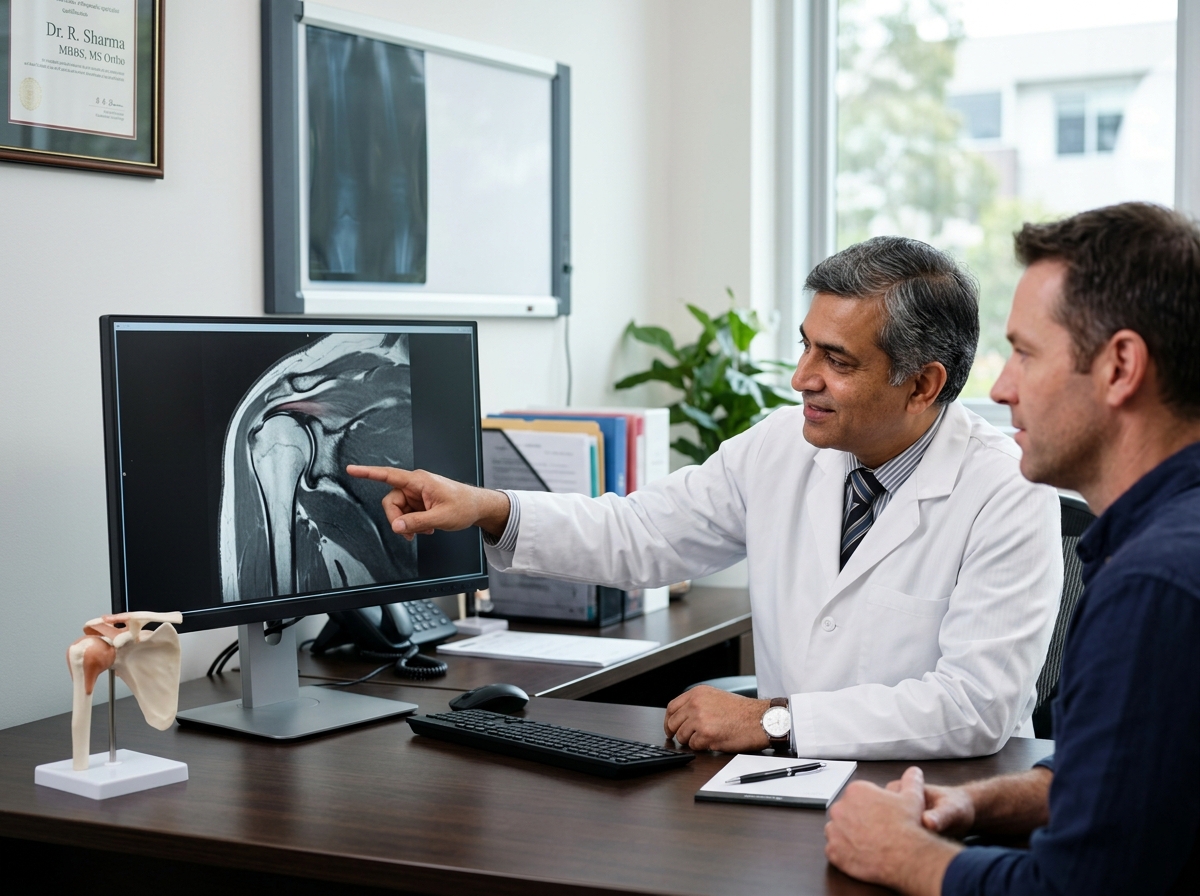
Ultrasound or MRI may be used when clinically appropriate to evaluate the rotator cuff tendons, assess whether a tear is partial or full-thickness, measure tear retraction, and examine surrounding muscle quality.
Bring your MRI scans, CD, and diagnostic reports to your consultation so the orthopaedic specialist can review the findings together with your clinical examination.
Book MRI Review ConsultationNot All Rotator Cuff Tears Are the Same
Tears vary significantly by depth, size, chronicity, and tissue quality. Understanding your specific tear characteristics helps guide appropriate care.
Partial-Thickness Tear
The tendon is frayed or damaged on one surface (articular or bursal side) without extending completely through the full thickness of the tendon tissue.
Full-Thickness Tear
The tear extends all the way through the tendon thickness, creating a defect that may allow the tendon edge to pull back slightly from its bone footprint.
Tear Size Categories
Tear size influences treatment considerations, but clinical management depends on more than measurement alone—function and pain remain central.
Acute Traumatic Tear
Occurs suddenly after an identifiable injury, such as falling onto an outstretched arm, lifting an unexpectedly heavy load, or a sports trauma.
Degenerative Tear
Develops slowly over time as a natural consequence of aging, reduced tendon blood supply, or repetitive overhead friction against acromial bone.
Massive / Complex Tear
Involves two or more complete tendons and requires comprehensive evaluation of remaining muscle quality, fatty infiltration, and shoulder biomechanics.
Clinical Principle: Treatment decisions depend on factors such as symptoms, functional limitation, tear characteristics, tendon quality, patient age, activity requirements and associated shoulder findings.
Discuss Your Shoulder ScanDoes Every Rotator Cuff Tear Need Surgery?
Treatment depends on symptoms, functional limitation, tear characteristics, cause of injury, activity demands, response to non-surgical treatment, tendon and muscle condition, and overall clinical assessment.
Non-Surgical Treatment
May be appropriate in selected patients, particularly those with partial tears, degenerative tears with preserved function, or medical factors where surgery is not advised.
Treatment may include:
-
Activity Modification: Temporarily resting the arm from painful overhead tasks.
-
Pain Management: Ice, heat, and medical guidance to control acute bursal inflammation.
-
Targeted Physiotherapy: Supervised shoulder conditioning by hospital therapists.
-
Shoulder Mobility Work: Gentle passive and active-assisted range preservation.
-
Strengthening & Retraining: Conditioning intact cuff tendons and scapular muscles to compensate.
-
Addressing Contributing Factors: Postural retraining and ergonomic adjustments.
Surgical Treatment
May be considered in selected patients where conservative care is inadequate or where acute structural damage warrants repair.
Considerations May Include:
-
Significant Functional Weakness: Inability to actively elevate or use the arm.
-
Acute Traumatic Tears: Sudden full-thickness tear after a fall in an active person.
-
Persistent Symptoms: Pain and functional loss continuing despite appropriate non-surgical care.
-
Tear Characteristics: Retractable tears with good tendon and muscle quality.
-
Patient-Specific Goals: Demands of manual employment, overhead hobbies, or active sport.
Not Sure Which Option Is Right for You?
A thorough orthopaedic evaluation will clarify your tendon integrity, functional reserve, and personal recovery goals.
Discuss Your Treatment OptionsHear From Our Recovered Patients
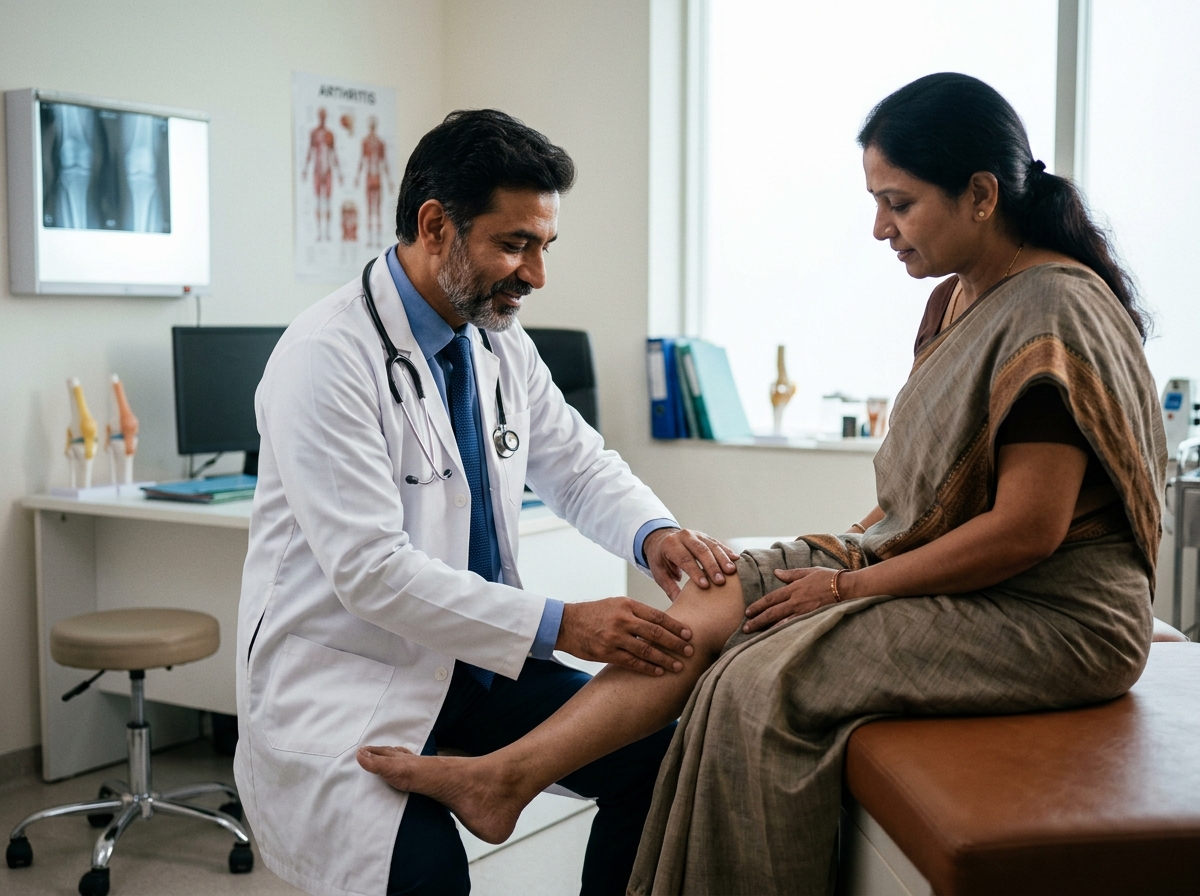
Real stories of shoulder pain relief, strength restoration, and active living at Sathya Sai Hospital.
 Verified Recovery
"I had severe shoulder pain and couldn't raise my arm. The treatment and rehab restored full strength and pain-free motion."
 Verified Recovery
"Night pain made sleeping impossible. After consultation and guided therapy, I can finally sleep peacefully again."
 Verified Recovery
"Expert diagnosis and seamless treatment at Sathya Sai Hospital. Back to work and swimming comfortably!"
Arthroscopic Shoulder Surgery
During arthroscopic examination, the surgeon thoroughly inspects the entire shoulder joint and subacromial space.
The exact procedure depends on what is identified during clinical and imaging assessment. Associated shoulder findings that may be addressed where clinically appropriate include:
- Rotator cuff pathology: Re-attaching torn supraspinatus, infraspinatus, or subscapularis tendons.
- Labral problems: Evaluating the cartilage rim stabilizing the shoulder socket.
- Biceps tendon pathology: Trimming or stabilizing an irritated long head of biceps.
- Subacromial impingement: Smoothing bone spurs that pinch the tendon.
- Other intra-articular conditions: Clearing inflamed bursal tissue.
When Can You Return to Work or Sport?
Different activities place different biomechanical demands on the shoulder. Return is staged according to activity intensity:
Desk / Light Activity
Typing, writing, and sedentary desk duties with the arm supported close to the body can often be resumed relatively early.
Manual Work
Occupations requiring repetitive lifting, pushing, or pulling need adequate strength consolidation before clearance.
Gym / Exercise
Cardio and lower-body workouts start earlier; upper-body pressing, pulling, and weights are phased in progressively.
Overhead & Throwing
Badminton, swimming, cricket, and tennis impose high tendon stress and require full strength and functional testing.
Why Choose Sathya Sai for Shoulder & Orthopaedic Care?
Located in KR Puram, Bengaluru, Sathya Sai Orthopaedic & Multispeciality Hospital provides comprehensive, integrated shoulder care from clinical assessment to arthroscopic surgery and guided rehabilitation.
Consult an Orthopaedic & Shoulder Arthroscopy Specialist
Consult our experienced orthopaedic and sports medicine team at Sathya Sai Hospital.

Dr. Vimal Kumar K H
Orthopaedic specialist with dedicated sub-specialty training in shoulder care, sports injuries, arthroscopic rotator cuff repair and joint preservation.
Book Appointment
Dr. Mahesh M N
CEO and Medical Director with over 20 years of clinical experience in complex joint reconstruction, trauma and spine surgery.
Consult with Team
Dr. Vijay M
Senior Trauma and Arthroplasty Surgeon with over 20 years of orthopaedic excellence in complex joint procedures.
Consult with TeamFrequently Asked Questions About Rotator Cuff Tears
Clear, medically responsible answers to common patient questions regarding shoulder tendon tears, symptoms, surgery, and rehabilitation.
What is a rotator cuff tear?
A rotator cuff tear occurs when one or more of the tendons connecting the rotator cuff muscles to the upper arm bone become torn. Tears can range from partial fraying of the tendon surface to complete detachment from the bone.
What are the symptoms of a rotator cuff tear?
Common symptoms include shoulder pain radiating down the upper arm, a painful arc during arm lifting, weakness when raising or rotating the arm, difficulty reaching behind the back, and nocturnal pain when lying on the affected shoulder.
Can a rotator cuff tear heal without surgery?
While a structurally torn tendon edge does not spontaneously reconnect to bone, many patients with partial tears or degenerative tears achieve good pain relief and functional restoration through non-surgical management, including guided physiotherapy and muscle re-education.
Does every full-thickness tear need surgery?
No. Surgery is not mandatory for every full-thickness tear. Treatment depends on your pain levels, functional limitations, activity requirements, age, and response to conservative therapy. Selected patients can function comfortably with non-surgical care.
Is an MRI necessary for a rotator cuff tear?
An MRI is often recommended when symptoms persist or when surgery is contemplated. It confirms the diagnosis, shows whether the tear is partial or full-thickness, measures tear size and retraction, and evaluates the quality of surrounding muscle tissue.
What is the difference between a partial and full-thickness tear?
A partial-thickness tear damages some tendon fibres without going completely through the tendon substance. A full-thickness tear extends entirely through the tendon from top to bottom, creating an open defect where the tendon separates from bone.
Can a rotator cuff tear happen from a fall?
Yes. Acute traumatic tears commonly occur when landing on an outstretched arm, slipping, or sustaining a sudden traction force to the shoulder. In active individuals, acute tears are often evaluated promptly for potential surgical repair.
What does rotator cuff repair involve?
Rotator cuff repair involves re-attaching the torn tendon back to the humerus bone using specialized suture anchors. The anchors reside in the bone while high-strength sutures secure the tendon firmly in place until biological healing knits them together.
What is arthroscopic shoulder surgery?
Arthroscopic shoulder surgery is a minimally invasive keyhole procedure where a slender camera and precision tools are inserted through small skin portals. It allows the surgeon to visualize, assess, and repair shoulder tissues with minimal disruption to the overlying deltoid muscle.
How long does recovery take after rotator cuff repair?
Recovery is gradual because biological tendon-to-bone healing takes time. A sling is typically worn for several weeks to protect the repair, followed by phased range-of-motion exercises, progressive strengthening, and eventual functional return over several months guided by milestones.
When can I return to work or exercise?
Desk work can often be resumed within a few weeks while supported in a sling. Manual labour, heavy lifting, gym workouts, and overhead sports require adequate strength, range, and clinical clearance from your specialist and physiotherapist.
Can physiotherapy help a rotator cuff tear?
Yes. Physiotherapy is a cornerstone of shoulder treatment. It strengthens intact rotator cuff muscles, improves shoulder blade control, reduces impingement mechanics, and is indispensable for restoring function both with non-surgical care and after repair surgery.
Have a question regarding your shoulder pain or MRI?
Ask Our Orthopaedic TeamPersistent Shoulder Pain or Weakness?
A specialist assessment can help identify the cause of your shoulder symptoms and determine whether non-surgical care, rehabilitation or surgery may be appropriate.
Request an Evaluation
Our team will call you to confirm appointment details.
Our orthopaedic coordination desk will contact you shortly.